Ice Climbing in Iceland: What the Day Actually Involves
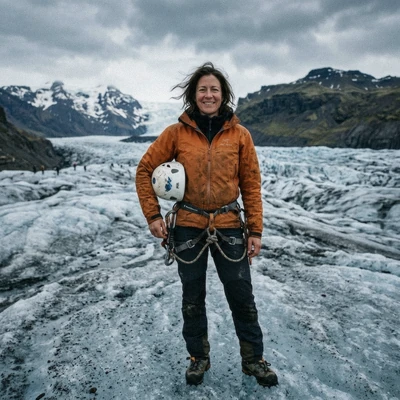
Ice climbing Iceland sounds like something you work up to. In practice the beginner version is a day tour: you turn up in warm clothes, someone hands you boots, two axes and a harness, and by lunchtime you are hanging off a wall of blue ice with your calves burning. This is what that day looks like on Falljökull at Skaftafell, what it costs, and how it differs from the glacier hike people usually book by mistake.
Quick answer
Ice climbing in Iceland is sold as a beginner day tour, and no previous experience is needed because the technique is taught on the ice. The Skaftafell version runs 7.5 hours for $241, caps groups at six per guide, and includes ice-climbing boots, crampons, helmet, harness and axes. Minimum age is 14. You need basic fitness for long distances on uneven ice more than you need arm strength.
Key takeaways
- $241 for 7.5 hours on Falljökull, rated 4.9 from 65 reviews, with about four hours on the ice before the walls
- Six guests per guide, the tightest ratio sold from Skaftafell, so nobody waits long for a turn on the rope
- Boots are included on this tour, unlike the plain glacier hikes where they are a rental
- Minimum age 14, and crampons do not fit shoes below EU size 35
- Runs all year at Skaftafell. Frozen-waterfall climbing is a separate, winter-only activity
- Free cancellation up to 24 hours ahead and no payment today
Check Dates for the Ice Climbing Day
Live availability for the 7.5-hour Glacier XTreme. Six spots per guide means the summer dates go early.
What You Are Actually Doing Up There
Climbing Ice Is Not Climbing Rock
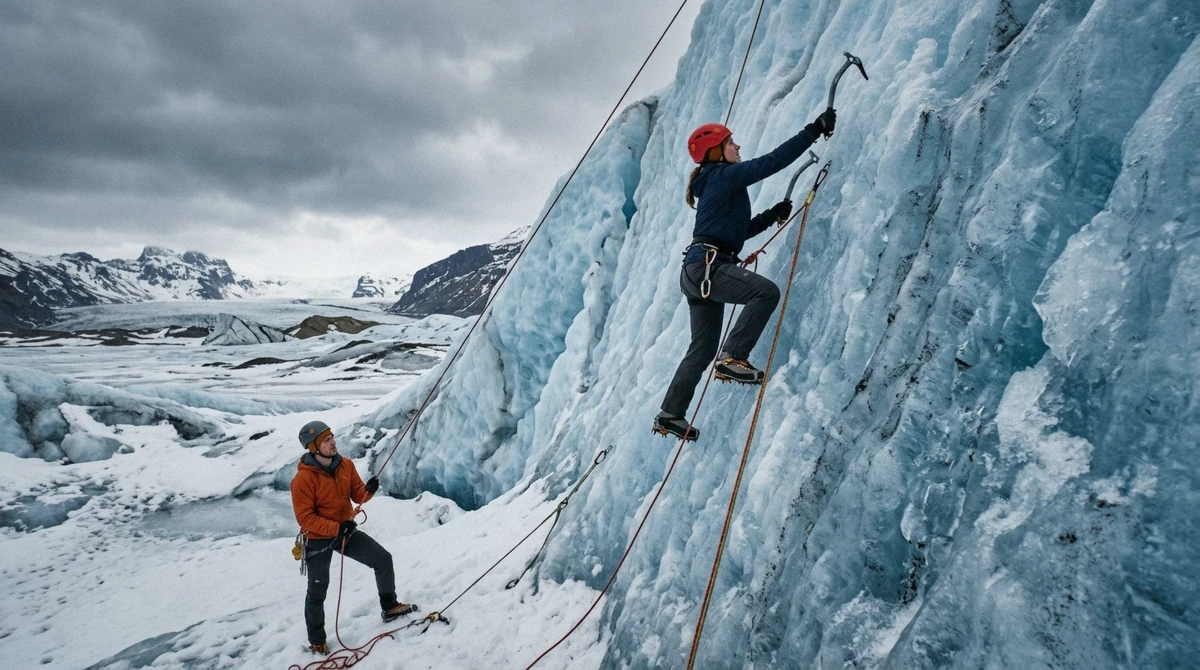
Rock climbing asks you to find holds that already exist. Ice climbing asks you to make them. You swing a curved axe into the wall until the pick bites, kick the front points of your crampons in at the same angle, and stand up on your feet rather than pulling with your arms.
That last part is the whole lesson. Beginners haul themselves up with their biceps, burn out in three minutes and come off the wall convinced they are not strong enough. The technique is legs, and once someone says it out loud most people get up the wall on the second attempt.
The ice you climb on a day tour is not a frozen waterfall. It is the side of a crevasse or a serac on the glacier itself, picked by the guide that morning because it is solid, close to level ground, and short enough that a fall means swinging into space rather than hitting anything.
Where It Happens in Iceland
Three kinds of ice get climbed here, and travellers mix them up constantly.
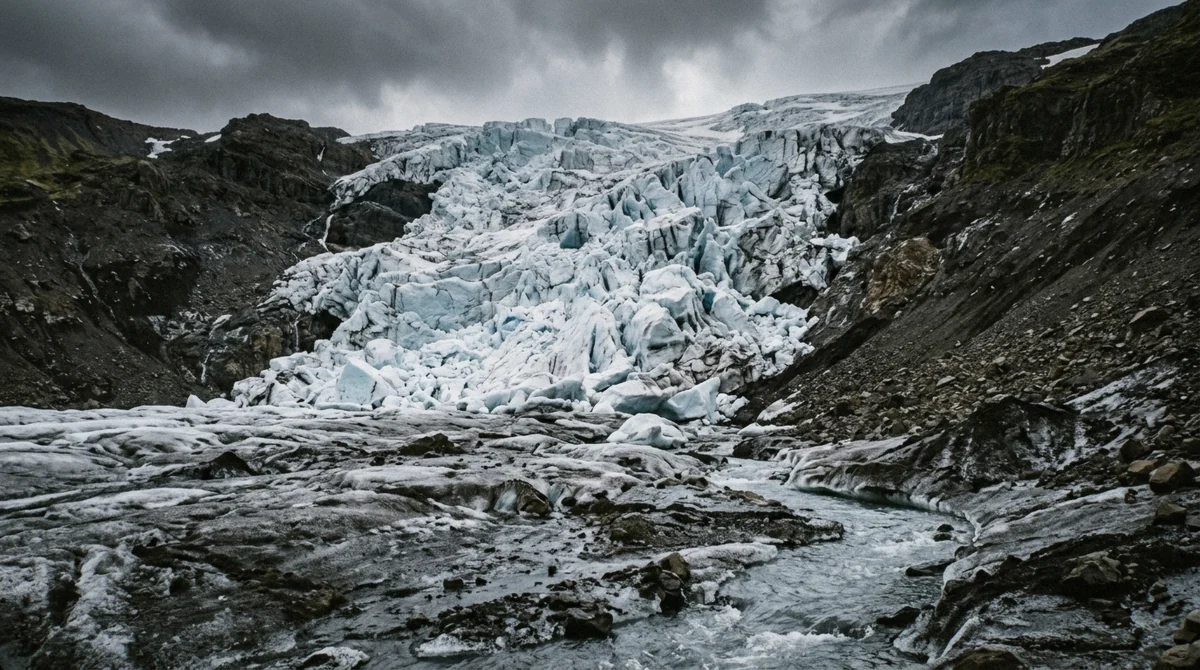
Glacier ice at Skaftafell is the harder of the two day-tour options, on the outlets of Vatnajökull. This is where the walls are steepest and the surrounding terrain most broken, which is also why the approach is a hike rather than a stroll.
Glacier ice at Sólheimajökull, on the south coast between Skógafoss and Reynisfjara, is the gentler introduction. Icelandic Mountain Guides describe it as the ideal first climb, it runs all year, and it is two hours from Reykjavík instead of five.
Frozen waterfalls are the third kind and a different sport. They form only in deep winter, the ice is brittle and technical, and the tours that visit them are for people with some experience. If you are searching for ice climbing Iceland in July, this option does not exist yet.
The Season, and Why Summer Is Easier
Skaftafell sells this tour all year, which surprises people who assume ice climbing is a winter thing. The seasons change the ice rather than the availability.
Summer ice is softer. An axe goes in with one swing, the pick sets cleanly, and a beginner spends their energy climbing instead of hammering. Guides at Icelandic Mountain Guides make the same point: in winter the ice can get hard enough to fight you, and getting a tool to hold takes real force.
Winter gives you bluer, cleaner ice, longer shadows for photographs, and the chance of an ice tunnel on the walk in. It also gives you five hours of daylight in December, which is the practical constraint on a 7.5-hour tour.
If the climbing is the point, book May to September. If the glacier is the point and the climbing is a bonus, winter is beautiful and you will work harder for each metre.
Weather can also take the climbing out of the day without cancelling it. If wind picks up on the exposed upper tongue, guides shorten the walk and find a lower wall, and if the ice is running with meltwater after warm rain they will pick a different face entirely. The tour still runs. What changes is which walls you get, which is another argument for booking a date early in your trip so a spare day exists behind it.
The Gear, and What You Bring
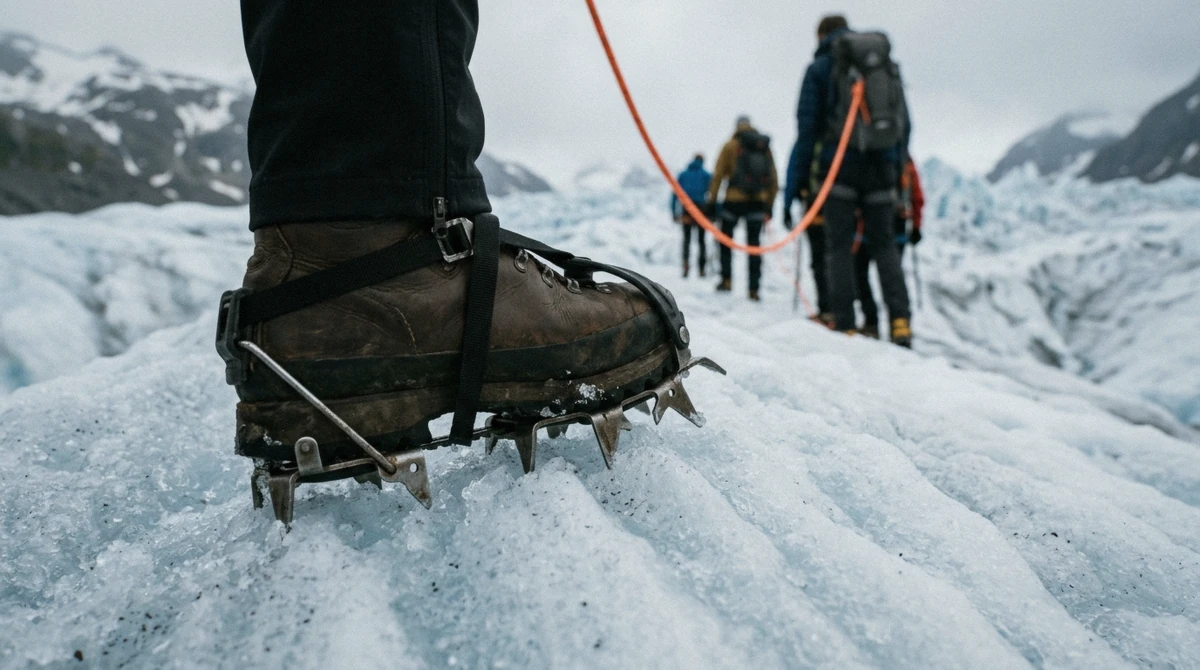
Everything technical comes with the tour: helmet, harness, crampons, ropes and ice axes. On the Skaftafell day, ice-climbing boots are included too, which matters more than it sounds. Climbing needs a stiff sole that will hold your weight on two centimetres of steel, and ordinary hiking boots flex too much. The issued boots run EU 36 to 50.
What you bring is clothing. Warm base layers, fleece or wool over them, a windproof and waterproof shell, a hat, gloves and a water bottle. Bring a spare pair of gloves if you have them, because the first pair gets wet on the ropes and cold hands end more climbs than tired arms do. The full layering system is in our glacier hike packing list.
Food is not provided. Pack lunch and more snacks than you think, since you are out for the better part of eight hours and there is nothing to buy after the bus leaves.
What "Tailored to the Group" Means on a Wall
Every listing says the difficulty is adapted to you, which sounds like marketing until you watch it happen.
The guide walks the area first and picks two or three walls of increasing angle. The first is barely past vertical and short, five or six metres, so everyone gets up it and learns what a good axe placement feels like. The second is longer and steeper. The third exists for whoever still has forearms left.
Nobody is made to climb. Reviewers describe passing on the last wall without any fuss, which is the normal shape of the afternoon rather than a failure. You are on a top rope the whole time, so coming off means hanging in the harness for a moment while the guide lowers you.
The part people underestimate is the standing around. Six climbers sharing one rope means waiting your turn in the cold, which is why the group cap matters and why a spare warm layer is worth carrying. On a tour with fifteen guests you would spend most of the afternoon watching.
Fitness, Age and Who Should Skip It
The minimum age is 14 on standard ice-climbing tours, here and at Sólheimajökull. Below EU shoe size 35 the crampons will not fit, which sets a second floor that catches families out.
Fitness matters more than strength. The walls are the memorable part but they are a fraction of the day: most of the 7.5 hours is spent walking on uneven ice, gaining height, in crampons, with a pack. A traveller from Germany who went in July 2026 put it well, saying you do not need to be an experienced mountaineer but you do need a certain level of basic fitness for the long distances on ice and then for the walls.
Body weight helps more than people admit. A climber from Singapore who went in September cleared two walls, passed on the third, and noted that her lighter friend who was less fit went up in record time. Nobody minds if you sit one out.
Skip it if you have a back or heart condition, if you are pregnant, or if a full day of physical work in cold weather sounds like a bad holiday. The five-hour glacier hike covers the same glacier with none of the climbing.
Cold Hands, Wet Gloves and Other Small Problems
The thing that ends more climbs than tired arms is hands.
Swinging an axe above your head drains blood from your fingers, and the ropes and the wall are both wet. Gloves soak through on the first climb, and cold wet hands cannot grip a tool. Bring a second pair, keep them dry inside your jacket, and swap.
The other reliable complaint is the opposite problem. You will overheat on the walk in, carrying everything you brought, and then stop dead at the wall and cool fast. Layers you can shed and re-add beat one warm jacket. Sunglasses matter more than people expect on a bright day, because glacier ice throws light back at you all day.
Cameras are welcome and phones survive fine, though nobody is taking photographs while climbing. Guides on these tours generally take pictures of the group and share them afterwards, which is worth asking about at the hut rather than at the end.
Hike or Climb: Which One You Are Booking
The two get confused because the listings look alike and both say Skaftafell.
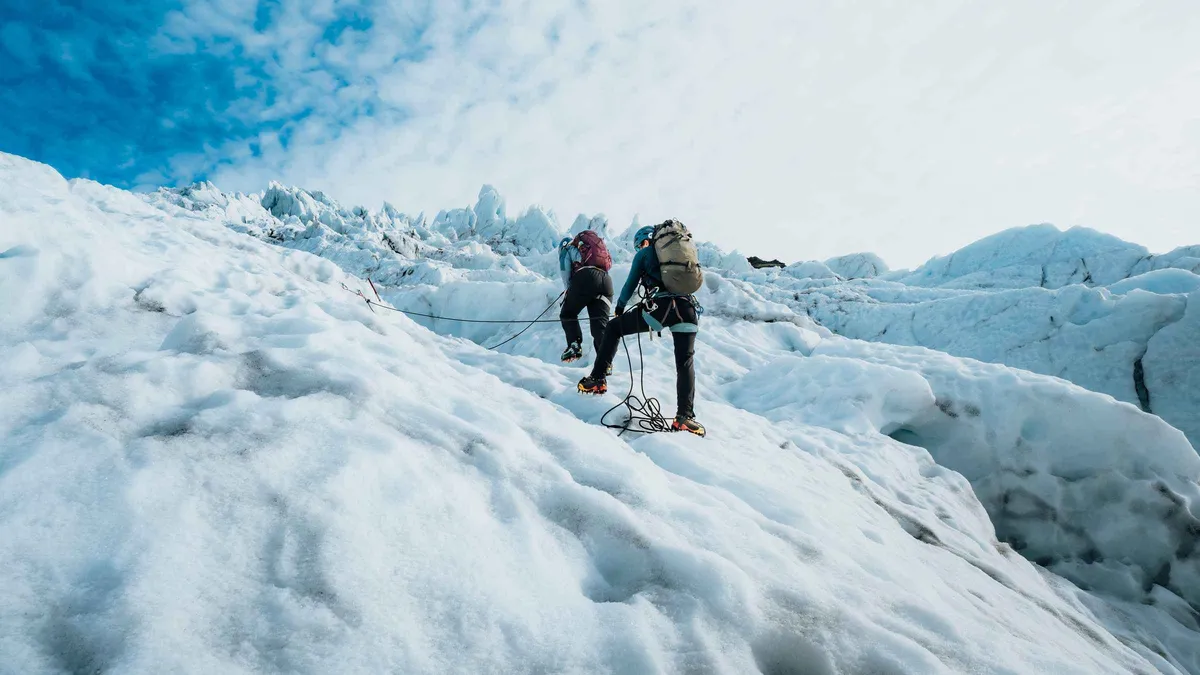
A glacier hike is a walk on ice with crampons. You cross crevasse fields, look into moulins, and gain a couple of hundred metres. There is no rope work beyond the guide's own safety line, and the day runs 3 to 6 hours.
An ice climbing tour is that walk plus an afternoon of vertical work. You get a harness that gets used, two axes instead of one, and boots built for the job. It costs $241 against $97 to $206 for the hikes, and it takes the whole day.
The honest test: if you want to see a glacier, take a hike and take a long one. If you want the specific feeling of standing on two steel points above open air with your forearms shaking, only the climb gives you that, and no amount of walking substitutes.
Doing It Without a Guide
You cannot, and nobody credible pretends otherwise. Icelandic Mountain Guides state it flatly: it is unsafe to go up on a glacier or embark on an ice climb without a guide. Vatnajökull National Park says the same on the sign at the end of its marked trail.
The reasons are specific. Crevasse fields change from week to week and snow bridges hide them. Glacier snouts are undercut by meltwater and calve blocks without warning. Ice quality varies wall to wall in a way that takes a season of daily looking to read. Guides here are certified and check the routes each morning for exactly this.
If you already climb and want to lead your own routes, that is a different conversation and involves mountaineering outfits, not day tours. Icelandic Mountain Guides run a six-day Mountain Skills course for over-18s that exists for this reason.
There is a second reason beyond safety. The good walls are not obvious. A guide who has worked the same tongue all season knows which seracs are stable this week, where the ice takes a tool cleanly, and which crevasse has a floor you can stand on to belay from. Turning up with your own axes and picking a wall by eye gets you brittle, air-filled ice that shatters on the first swing.
For climbers who do want to lead their own routes in Iceland, the route in is a mountaineering course rather than a day tour. Icelandic Mountain Guides run a six-day Mountain Skills programme for over-18s, and specialist outfits like Bergmenn in the north guide multi-pitch and alpine objectives for people who already climb.
Three Kinds of Ice Climbing in Iceland
Prices are per person and were checked in July 2026. Comparable tours from Icelandic Mountain Guides are listed for reference.
| Where | Season | Difficulty | Book | Min age | Price |
|---|---|---|---|---|---|
| Falljökull, Skaftafell | All year | Hardest of the day tours | 14 | $241 for 7.5 hours | |
| Sólheimajökull, south coast | All year | The gentle introduction | 14 | About €200 for 5.5 hours | |
| Skaftafell hike plus climb | Summer mainly | Moderate | 14 | About €221 for 4.5 hours | |
| Frozen waterfalls | Winter only | Technical, some experience | Varies | Quoted per trip |
How the 7.5 Hours Break Down
-
Meet at the Skaftafell hut
Sign in at the wooden cabin beside the visitor centre, meet the guide and collect ice-climbing boots, crampons, helmet, harness and axes. Groups are capped at six per guide.
-
Drive to the ice
A short run in a 4x4 bus from the hut to the edge of Falljökull, about 11 km west of the visitor centre.
-
Crampon technique on flat ice
Ten minutes of walking practice before anything steep. Flat-footed, deliberate steps, and how to use the axe as a third point of contact.
-
Hike higher than the standard routes
Up through crevasse fields and jagged formations, heading further onto the glacier than the hiking tours go. This is the bulk of the day.
-
The walls
The guide picks lines and sets ropes, teaches the swing and the kick, and tailors the difficulty. Beginners and returning climbers share the same session.
-
Descend and drive back
Back down the tongue and onto the bus. Departures that start at 9:30 in the morning have people back around six in the evening.
What Climbers Wrote Afterwards
Great Experience! You don't need to be an experienced mountaineer or climber, but you should have a certain level of basic fitness to be able to hike the sometimes long distances on the ice and, above all, to be able to climb the ice walls. Our guide Darragh was super friendly, funny, knowledgeable, and experienced. I felt very safe at all times.
We came on 6 Sep & the weather was great that day. We walked up the glacier and climbed 3 walls in ascending difficulty. I was gassed out after the second wall and decided to pass on the last one. Our guide, Dara, was great! It's definitely easier the lighter you are as my skinny friend who wasn't very fit was able to scale the wall in record time according to our guide.
AMAZING experience!! I've never climbed before but the guide was very knowledgeable and that gave me confidence. It was beautiful to experience the glacier in such a unique way.
Amazing time up on the glacier! Ice climbing was so much fun, probably buying gear to get back into it! Thanks again guys
Ice Climbing Questions People Ask First
Can you ice climb in Iceland with no experience?
Yes, and most people on these tours have never done it. Technique is taught on the day: how to swing the axe so the pick sets, how to kick the front points in, and why you stand on your legs rather than pull with your arms. The guide picks walls that suit the group and adjusts the difficulty person by person. What you need is basic fitness, not skill.
How much does ice climbing in Iceland cost?
The Skaftafell day is $241 for 7.5 hours including boots and all technical gear. Icelandic Mountain Guides sell a 5.5-hour Sólheimajökull climb at around €200 and a 4.5-hour Skaftafell hike-and-climb at about €221. Prices move with promotions, so compare the operator's own site with the platform before booking.
When is the ice climbing season in Iceland?
Glacier ice climbing at Skaftafell and Sólheimajökull runs all year. Summer ice is softer and easier for a first climb, since the axe sets in one swing. Winter ice is harder to get a tool into but bluer to look at, with about five hours of daylight in December against twenty in June. Frozen waterfalls are winter only.
How fit do you need to be?
Fit enough to walk several miles on uneven ice in crampons, carrying a small pack, across a day that runs seven and a half hours. The climbing itself is short bursts. Reviewers consistently describe the walking as the demanding part and the walls as the fun part, and one noted that being lighter helped more than being fit.
What is the minimum age for ice climbing in Iceland?
Fourteen on the standard tours at both Skaftafell and Sólheimajökull. A separate limit matters for smaller feet: crampons are not made below EU size 35, and the ice-climbing boots issued at Skaftafell start at 36. A teenager who meets the age floor may still not fit the gear.
What is the difference between ice climbing and a glacier hike?
A glacier hike is a walk on ice with crampons, 3 to 6 hours, $97 to $206, with no vertical work. Ice climbing adds an afternoon on vertical walls with ropes, two axes and stiff boots, and takes the whole day at $241. Both walk the same glacier and both include the safety gear.
Can I ice climb in Iceland without a guide?
No. Operators and Vatnajökull National Park agree on this: going onto glacier ice or a climb unguided is unsafe. Crevasses move and hide under snow bridges, the snout calves without warning, and ice quality varies wall to wall. Certified guides check the routes daily. Climbers who want to lead their own lines take a mountaineering course rather than a day tour.