The Best Glacier Hike in Iceland Depends on Where You Sleep
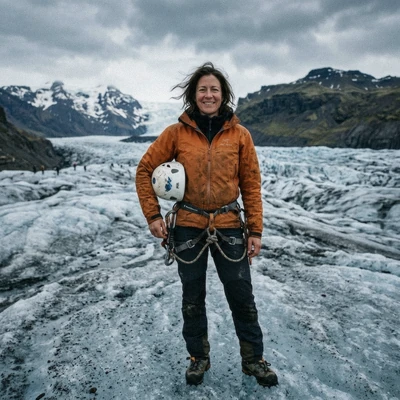
Ask which is the best glacier hike Iceland has and you get an argument, because the honest answer changes with your itinerary. Three glaciers sell day tours to the same traveller: Sólheimajökull on the south coast, Falljökull at Skaftafell, and Breiðamerkurjökull from Hali. They differ by four hours of driving, two years of minimum age, and whether the ice under you is flat or falling apart. This compares them on the numbers rather than the adjectives.
Quick answer
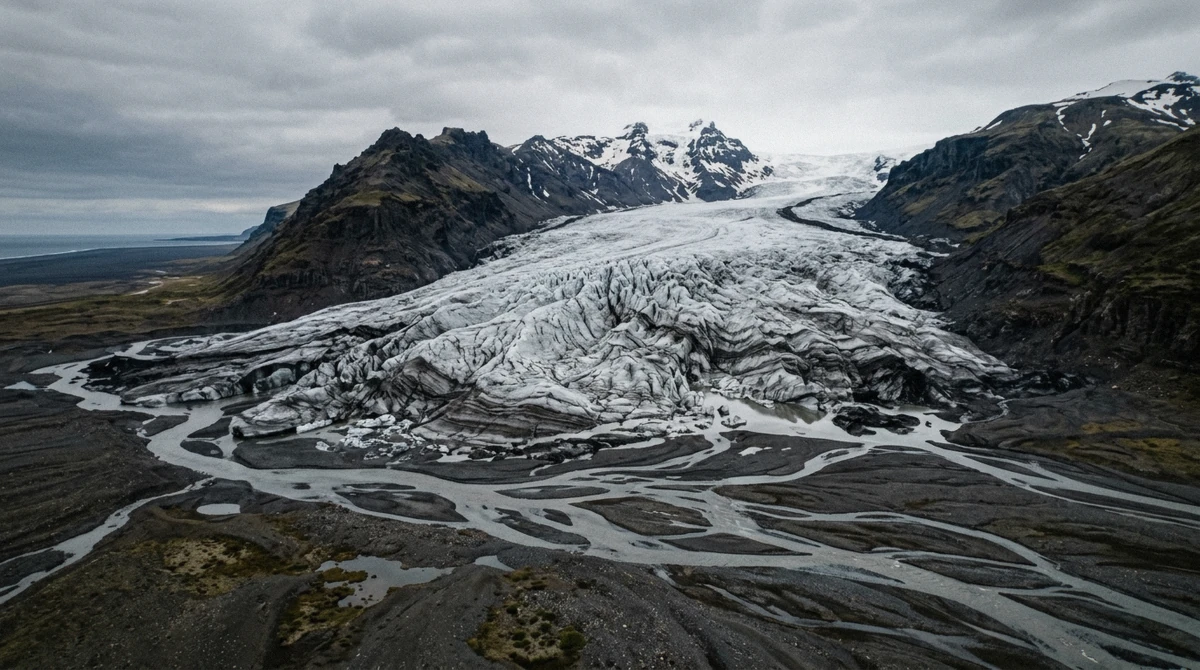
There is no single best glacier hike in Iceland, but there is a right one for each itinerary. Base yourself near Reykjavík or Vík and Sólheimajökull wins on convenience: easy, family-friendly from age 10, about two hours from the capital. Drive the south coast as far as Skaftafell and Falljökull wins on the ice itself, because it carries the icefall that makes it the most dramatic tongue on Vatnajökull. Sleeping near Jökulsárlón puts Hali closest.
Key takeaways
- Easiest and closest: Sólheimajökull, rated easy, minimum age 10, roughly two hours from Reykjavík
- Most dramatic ice: Falljökull at Skaftafell, moderate to challenging, ages 12 to 14, four and a half to five hours from Reykjavík
- Gentlest of the far east: Breiðamerkurjökull from Hali, four hours with 1.5 to 2 on the ice, 16,900 ISK, age 10
- Skaftafell routes run $97 to $241 for 3 to 7.5 hours, against roughly €123 for a typical 3.5 to 4 hour tour elsewhere
- Compare time on the ice, not total duration. It ranges from 1.5 hours to about 4 across these tours
- Nobody walks on any of them without a guide, and every operator and the national park say so
The Three Glaciers, Side by Side
Drive times are from Reykjavík in summer conditions. Prices are per adult and were checked in July 2026.
| Glacier | From Reykjavík | Difficulty | Book | Min age | Price |
|---|---|---|---|---|---|
| Sólheimajökull | About 2 hours | Easy | 10 | About €123 for 4 hours | |
| Falljökull, Skaftafell | 4.5 to 5 hours | Moderate to challenging | 12 to 14 | $97 to $241 | |
| Breiðamerkurjökull, Hali | About 5 hours | Easy to moderate | 10 | 16,900 ISK for 4 hours | |
| Langjökull, west | About 2 hours | Snowmobile and ice tunnel, not hiking | Varies | Quoted per trip |
What Each One Is Actually Like
Sólheimajökull: The One You Book If You Are Short on Time
Sólheimajökull is an outlet of Mýrdalsjökull, and it sits close enough to the Ring Road that the walk from car park to ice takes minutes. Icelandic Mountain Guides describe it as unique for its easy accessibility, and rate their standard walk easy with a minimum age of 10. If you're weighing any of these with children, our glacier hiking with kids guide has the per-tour age table and the crampon shoe-size floor.
Tours run from an hour on the ice up to full days, with a typical four-hour trip costing around €123. It is between Skógafoss and Reynisfjara, so it slots into a south-coast day that already includes both.
What you get is a broad, relatively flat tongue with good blue ice and manageable crevasses. What you do not get is drama. This is the glacier for a first time, for a family, and for anyone whose Iceland trip does not reach the southeast.
Falljökull at Skaftafell: The One With the Icefall
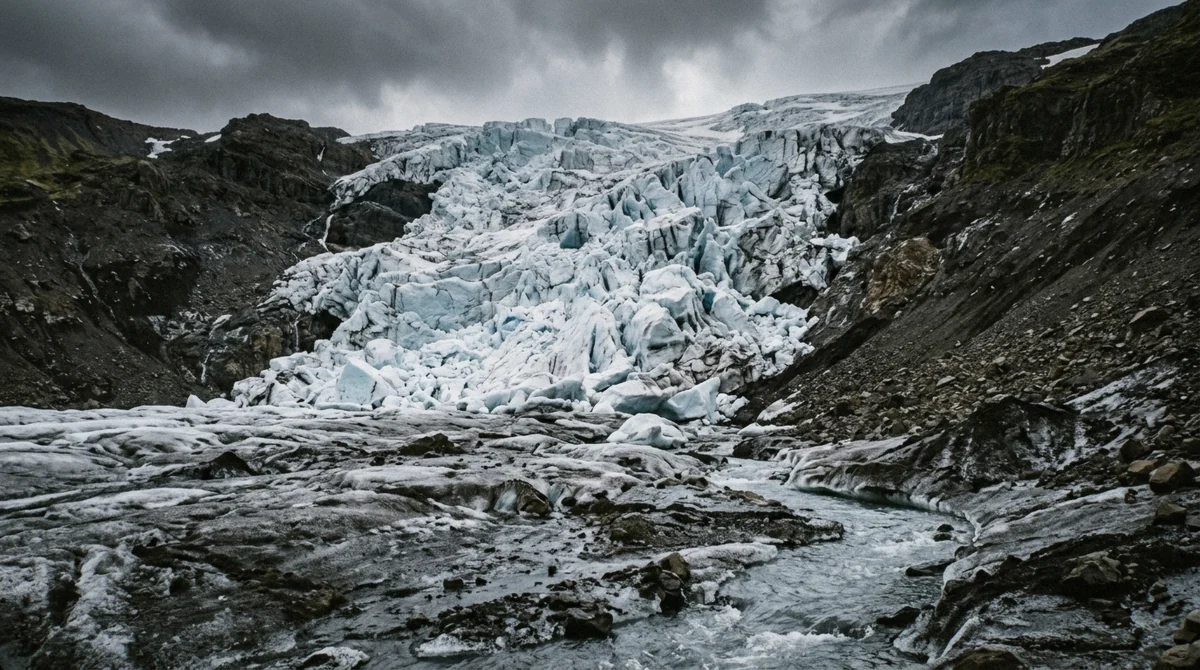
Falljökull drops off Vatnajökull down a step in the bedrock and breaks apart as it goes. Icelandic Mountain Guides call it the most impressive glacier tongue on the ice cap, thanks to the icefall that towers over the landscape, and that is the reason four operators drive past a closer glacier to reach it.
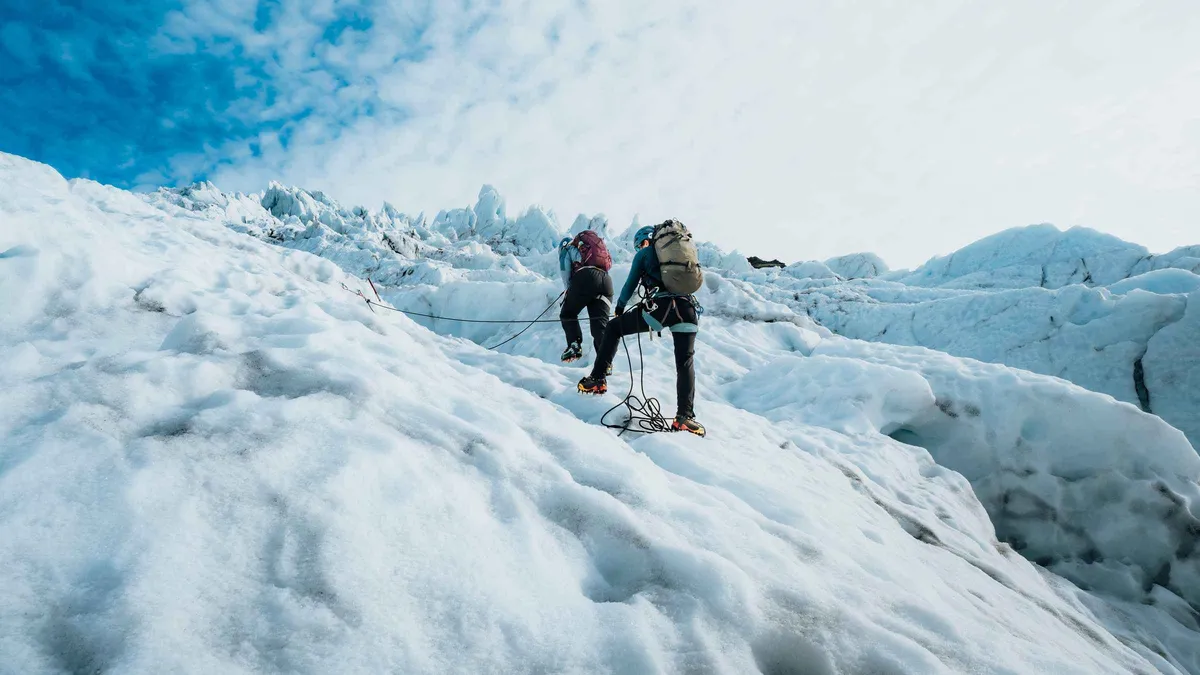
Up close it means stacked seracs, crevasse fields you route around rather than over, ridges you walk along, and moulins dropping into the dark. In winter the guides can often reach small ice tunnels.
The cost is effort and driving. Skaftafell is 327 km (203 mi) from Reykjavík, 4.5 to 5 hours in summer, so it belongs to a trip that runs the south coast properly rather than a day out. Routes are graded moderate to challenging, minimum ages sit at 12 and 14, and a standard hike climbs 200-250 m across uneven ice.
Six routes leave from here, from $97 for three hours to $241 for a day with ice climbing. The most reviewed is the five-hour Glacier Explorer at $166, rated 4.8 from 353 travellers.
Breiðamerkurjökull From Hali: The Quiet Middle Option
Breiðamerkurjökull is the tongue that calves into Jökulsárlón, and a base camp at Hali, 13 km east of the lagoon car park, runs walks onto it.
The format suits people who want the experience without the day: four hours in total, 1.5 to 2 of them on the ice, groups capped at 12, minimum age 10, at 16,900 ISK for adults and 10,700 ISK for children. Crampons, harness, helmet and ice axe are included, and parking, coffee and wifi are free at the camp.
It is the flattest ice of the three and the least crowded car park, which counts for something in July. If your day already includes the lagoon and the black-sand beach where the icebergs wash up, this is the walk that fits around them.
Langjökull Is Not a Glacier Hike
Langjökull comes up in every search for this and it belongs in a different category.
What runs there is snowmobiling on the ice cap and a man-made tunnel bored into it, entered by a modified truck. The tunnel is a genuinely striking piece of engineering, lit from inside, with the layers of a hundred years of snowfall visible in the walls. It is two hours from Reykjavík, which is why it sells.
What it is not is a walk on a glacier. You do not put crampons on, you do not cross a crevasse field, and the ice around you was cut by a machine rather than by the glacier's own movement. If someone in your group cannot manage hours of walking, this is a real alternative worth knowing about. If you came to walk on ice, it is not the thing you are looking for.
The Glacier Old Blog Posts Still Recommend, and Shouldn't
Svínafellsjökull sits in the next valley to Falljökull, five minutes off the Ring Road, and it used to be one of the busiest glacier hikes in Iceland. In the 2017 peak season an estimated thousand people a day walked it on guided tours.
Nobody walks it now. In June 2018 the local police and the Department of Civil Protection and Emergency Management issued a warning against travel on the glacier, after surveys found a fracture running through the Svínafellsheiði mountainside above it. The unstable block is estimated at 60 to 100 million cubic metres of rock, and if it goes it lands on the glacier. Guided activity has been suspended since, and the advice is to stop briefly at the viewpoint and no more.
It still turns up in itineraries and travel articles written before that, and in photographs of the Game of Thrones filming that happened there. If a blog or an AI answer suggests hiking Svínafellsjökull, the source is out of date by eight years. The Icelandic Meteorological Office keeps the monitoring updates public.
This is worth knowing when you compare glaciers, because the tours that used to run there moved to Falljökull, which is part of why four operators now share one tongue.
What Actually Decides It
Three questions settle this faster than any ranking.
Where are you sleeping tonight? None of these is a comfortable day trip from Reykjavík except Sólheimajökull. If your bed is in Vík, take Sólheimajökull. If it is between Kirkjubæjarklaustur and Skaftafell, take Falljökull. If it is near the lagoon, take Hali.
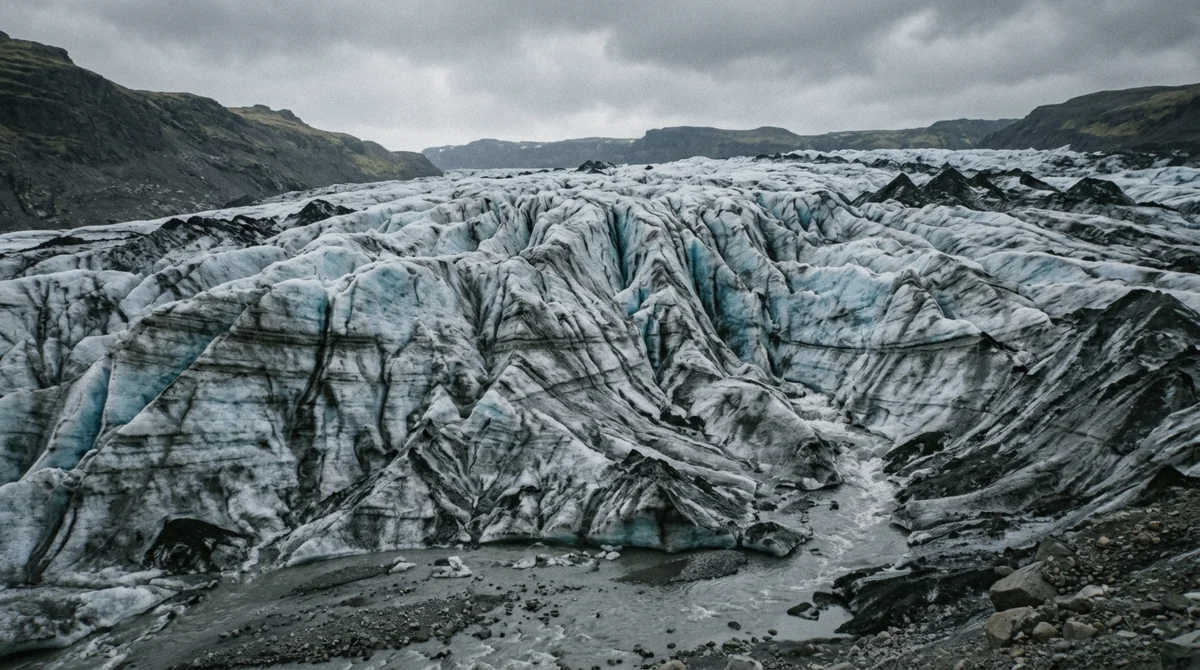
How long do you want to be walking? Time on the ice is the number that separates these tours, and listings bury it. A short walk gives you about 90 minutes on the glacier; a long Skaftafell route gives you four hours. Both are sold as half-day tours.
Who is coming? Ages 10 and up have three options. Ages 12 and 13 have the two six-hour Skaftafell routes and the easier glaciers. Under 10 has none of them, and crampons stop at EU shoe size 35 regardless of what the age limit says.
The Ice Cave Question, and When It Applies
Half the people comparing glacier hikes are really comparing glacier hikes with an ice cave bolted on, and the season decides whether that is even possible.
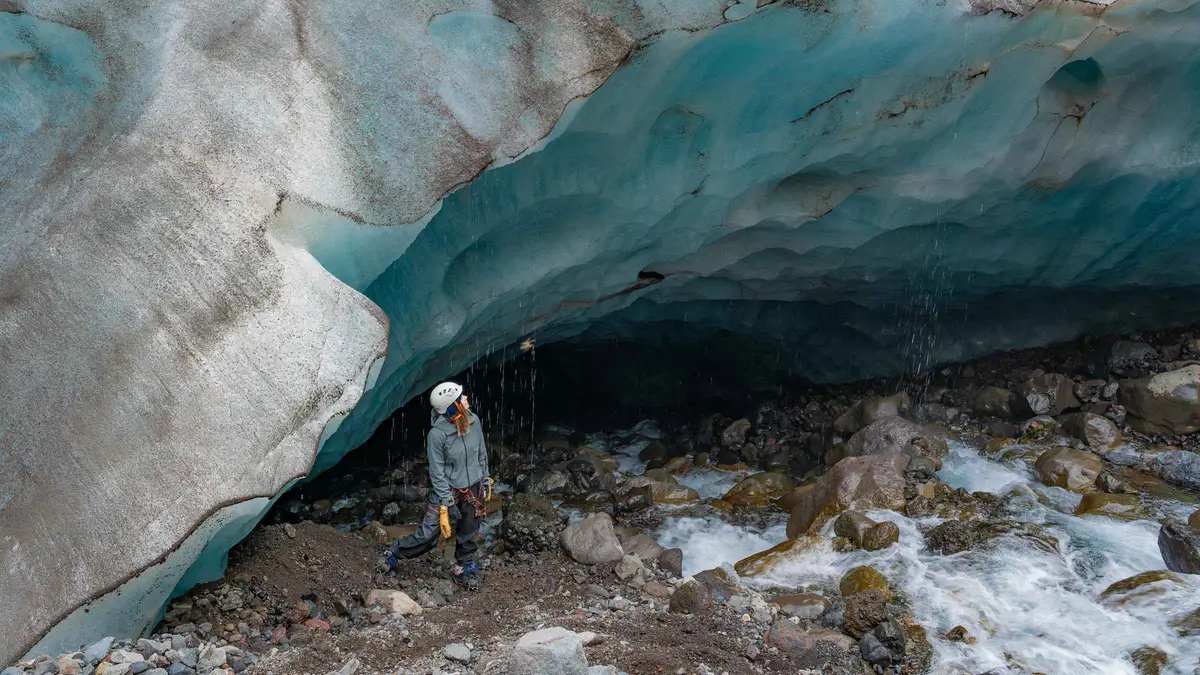
Natural caves form inside a glacier when summer meltwater carves channels through it and autumn freezes them solid. Operators can safely take people into them from roughly October to April, and every year the caves are different, because the ones from last winter have melted. Adding a cave to a hike adds about an hour and a step up in price.
Ask about a blue ice cave in June and the honest answer is that the cave in the photograph no longer exists. What is sold in summer instead is a man-made tunnel, which is a different product entirely, or the small ice tunnels that guides sometimes reach on the winter routes at Falljökull.
If a cave is the reason for the trip, book between October and April and pick the southeast, since the Vatnajökull outlets are where the reliable caves form.
Is a Glacier Hike Worth It at All?
For most people yes, with one caveat worth stating plainly: from a distance, a glacier snout looks like a dirty grey slope. Photographs of impossible blue ice are taken close up, inside crevasses, in specific light.
What changes on the ice is scale and sound. You walk past cracks that drop further than your torch reaches, hear meltwater running under your feet, and stand on something that is visibly moving downhill at a speed somebody can measure. Guides here point out the trimlines on the valley walls that show where the surface used to be, and the distance from those lines to your boots does more than any statistic.
Skip it if you cannot manage two to four hours of uneven walking, if you have a heart or back condition, or if you are travelling with children under 10. The free trail at Skaftafell reaches a glacier viewpoint in 4.1 km and costs nothing but parking. That trail is the S1, it climbs only 80 metres, and it passes sixteen numbered interpretation stops on the way to the viewpoint.
If You Only Have One Day and No Car
Two constraints change the answer completely: no rental car, or only one day out of Reykjavík.
Without a car, Sólheimajökull is the practical choice, because operators run coach day tours from Reykjavík that fold the glacier walk into a south-coast run past Seljalandsfoss and Skógafoss. They are long days, twelve hours or so, and the glacier gets an hour or two of that.
Skaftafell does not work this way. It is 327 km each way, and a day tour that reached Falljökull, put you on the ice for four hours and got you back would run to twenty hours. What runs instead are multi-day south-coast trips that sleep somewhere near Vík or Kirkjubæjarklaustur and do the glacier on the second morning. If your itinerary allows one night outside the capital, that is the version worth booking.
With a car and a single day, the honest advice is to pick Sólheimajökull and enjoy it rather than spend nine hours driving to a better glacier. The southeast rewards people who are already going there.
Booking, Crowds and Time of Day
All three glaciers sell out in July and August, and the pattern is the same everywhere: morning departures go first.
That is worth working with rather than against. An afternoon start on a long route puts you on the ice as the day tours are coming off it, and the light in the last hours is better for photographs than flat midday glare. In winter the arithmetic reverses, because five hours of daylight means a morning departure or nothing.
Booking terms are unusually forgiving here. Every route on this page takes no payment at the time of booking and cancels free up to 24 hours ahead, which is a response to a climate where a departure can be called off for wind. Holding two dates while you watch the forecast costs nothing, and there is no advantage to waiting.
One thing worth checking regardless of which glacier you pick: operators run their own promotions, so the price on their site and the price on a booking platform do not always match, and the gap moves. A two-minute comparison before you commit is worth it.
Why Nobody Lets You Walk On Alone
Every operator and Vatnajökull National Park say the same thing, and the marked trail at Skaftafell ends at a warning sign that spells it out.
A glacier snout is undercut by meltwater and sheds blocks the size of cars without warning. Crevasses open and close between weeks and snow bridges hide them. The surface that looks solid at the edge gets thin within metres. Guides check their routes daily because the route changes.
This is not an upsell. It is the reason a guided walk costs what it costs, and the reason the free trail stops where it does.
The Skaftafell Option in Detail
If the icefall is what you came for, these are the six routes onto Falljökull. Two of them meet east of the park rather than in Skaftafell, so read the meeting point alongside the price.
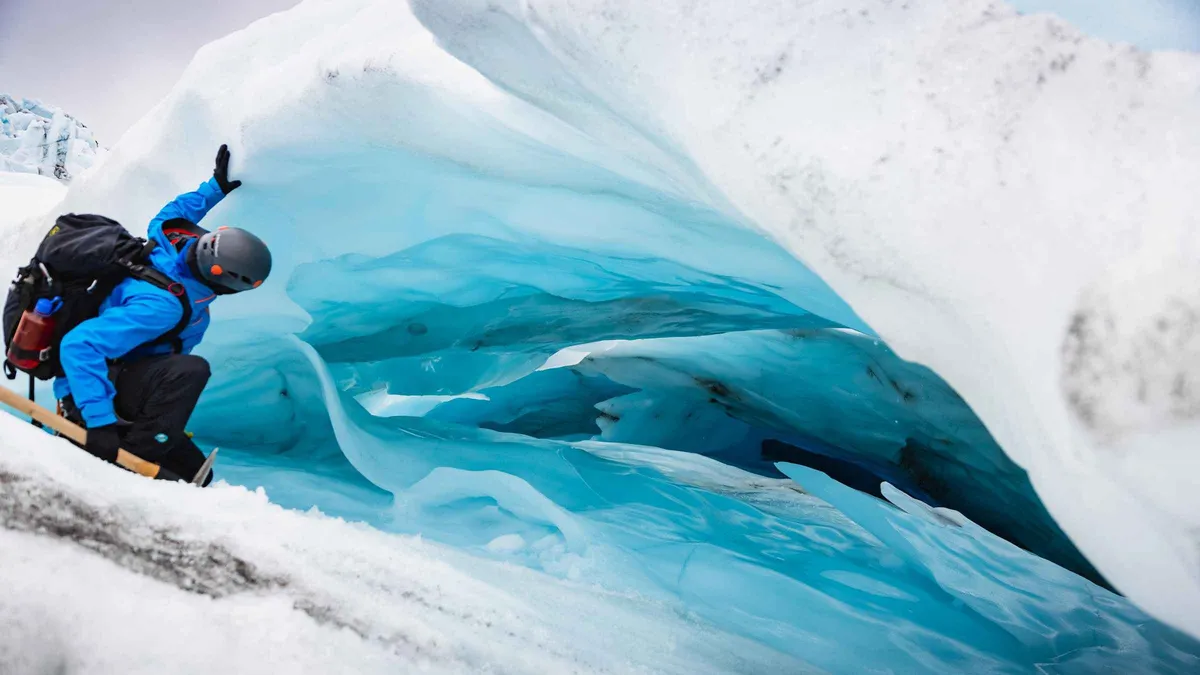 from $166
Most Reviewed — 4.8★, 353 Reviews
from $166
Most Reviewed — 4.8★, 353 Reviews Skaftafell Glacier Explorer — Extended Small-Group Trek
The most-reviewed glacier hike leaving Skaftafell, and the one that spends the longest stretch on ice for a half-day price. Five hours door to door, of which roughly…
- About four hours walking, of a five-hour tour
- 4x4 bus from Skaftafell base camp to the ice edge, 20 minutes each way
- Climbs toward the Falljökull icefall, not just the glacier snout
- Crampons, helmet, harness and walking axe included
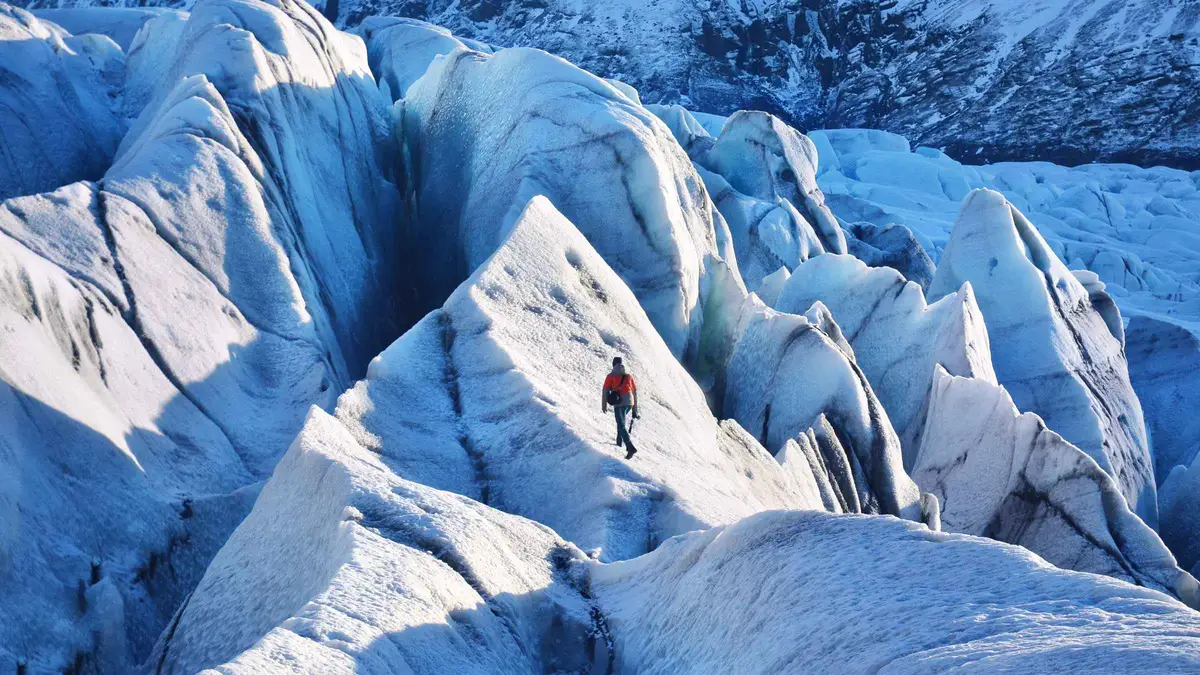 from $97
Lowest Price — From $97
from $97
Lowest Price — From $97 Skaftafell Glacier Hike — 3-Hour Beginner Walk
The cheapest way onto the ice at Skaftafell and the shortest commitment. Three hours in total on an easy route over crevasses and ridges, with crampons, helmet and…
- Three hours total, the shortest glacier hike sold here
- Beginner pace; no previous ice experience needed
- Crampons, helmet and ice axe included in the price
- Meeting point is Jökulsárlón car park — read this before booking
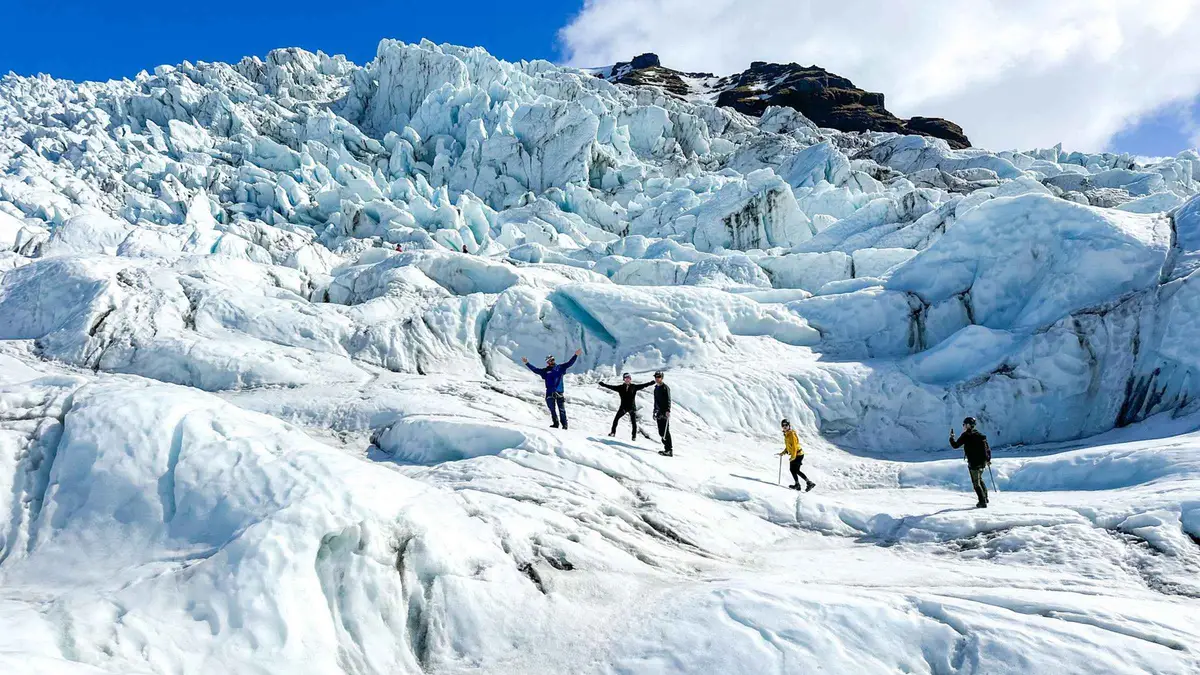 from $124
Best Value Half Day
from $124
Best Value Half Day Skaftafell Half-Day Glacier Hike — 5 Hours
A five-hour route that pushes past the busy lower tongue toward crevasses, ridges and moulins, and into small ice tunnels when winter conditions allow. Picks up at Fosshotel…
- Five hours, roughly half the price of the other long routes
- Goes deeper than the standard walk: crevasses, ice ridges, moulins
- Starts at Fosshotel Glacier Lagoon, 20 minutes by bus plus a 30-minute walk in
- Crampons, harness and glacier gear included
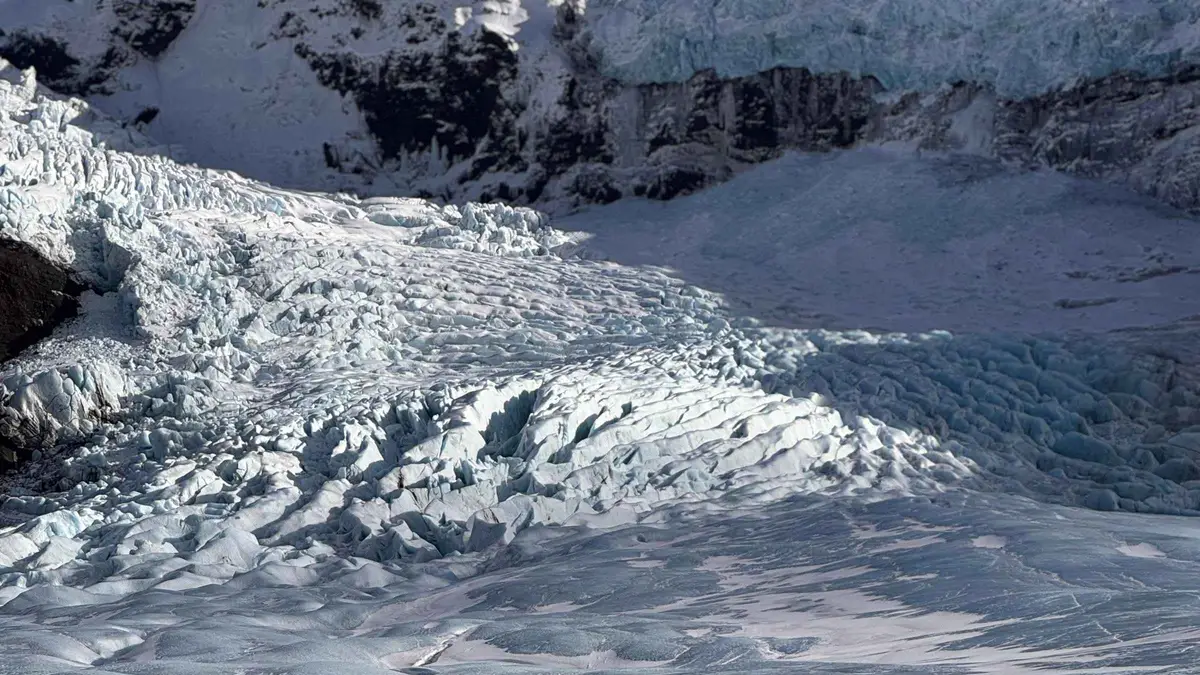 from $206
About 4 Hours on the Ice
from $206
About 4 Hours on the Ice Skaftafell Beyond the Limit — 6-Hour Glacier Adventure
Six hours from the Tröll Expeditions hut, with about four of them on Falljökull itself, working through the icefall with harnesses and ropes where the terrain calls for…
- Six hours total, roughly four of them walking on Falljökull
- Ropes and harnesses used on the steeper icefall sections
- Winter departures often reach small blue ice tunnels
- Helmet, crampons, harness and ice axe included
 from $191
Off the Marked Routes
from $191
Off the Marked Routes Skaftafell Long Adventure Glacier Hike
A six-hour crossing that leaves the marked routes entirely, climbing to the base of the icefall over sharp ridges and past deep moulins, with a lunch break at…
- Six hours, crossing the glacier rather than looping the snout
- Climbs to the base of the icefall over sharp ridges and crevasses
- Groups limited to eight; no fixed route
- Crampons, ice axe, helmet and safety harness included
 from $241
Ice Climbing — Max 6 per Guide
from $241
Ice Climbing — Max 6 per Guide Skaftafell Glacier XTreme — Hike and Ice Climbing
The longest day on the ice at Skaftafell and the only tour here that puts you on vertical walls with an axe in each hand. Groups are capped…
- 7.5 hours, the longest glacier day sold from Skaftafell
- Real vertical ice climbing on Falljökull, ropes and axes taught on the day
- Maximum six guests per guide
- Ice-climbing boots, crampons, helmet, harness and axes included
The Numbers Behind the Choice
Iceland has more glacier than most visitors expect, and the tours reach a very small part of it.
Questions People Ask When Choosing
Is a glacier hike in Iceland worth it?
For most people yes, provided you go with the right expectation. The postcard blue comes from close up inside crevasses, not from the grey snout you see from the car park. What justifies the money is standing on something that is measurably moving, next to cracks deeper than your torch reaches. Skip it if you cannot manage a few hours of uneven walking, and take the free viewpoint trail instead.
What's the most dramatic glacier hike?
Falljökull at Skaftafell, on the ice itself. It is the only one of the three day-tour glaciers with a genuine icefall, which means stacked seracs, ridges and crevasse fields rather than a broad flat tongue. Icelandic Mountain Guides call it the most impressive glacier tongue on Vatnajökull. Take a long route, since the short ones stay on the tamer lower section. Our safety and restrictions guide covers who the harder grades rule out, and the month-by-month timing guide covers when that ice shows its blue.
Which glacier hike is closest to Reykjavík?
Sólheimajökull, at roughly two hours by road, between Skógafoss and Reynisfjara. It is the only one of the three that works as a comfortable day trip from the capital. Skaftafell is 327 km and 4.5 to 5 hours away, and Hali is further still, so both belong to a south-coast itinerary with at least one night out of town.
What is the most popular hike in Skaftafell?
On foot and free, the S2 trail to Svartifoss, the basalt-column waterfall, followed by the S1 glacier trail to the Skaftafellsjökull viewpoint at 4.1 km. Among guided tours, the five-hour Glacier Explorer carries 353 reviews, more than the other five Skaftafell routes combined.
Can children do a glacier hike in Iceland?
From age 10 at Sólheimajökull and at the Hali base camp on Breiðamerkurjökull. Skaftafell sets higher floors, 12 on the six-hour routes and 14 on the Arctic Adventures pair. The limit that catches families out is equipment rather than age: crampons are not made for shoes below EU size 35.
How much should a glacier hike cost?
Roughly €123 for a standard 3.5 to 4 hour tour on Sólheimajökull, 16,900 ISK for four hours at Hali, and $97 to $241 at Skaftafell depending on length and whether ice climbing is included. Compare what each buys in time on the ice, because a $97 three-hour tour and a $166 five-hour tour differ by more than the price suggests.
What is the best time of year for a glacier hike?
All three glaciers run tours year round. Summer gives long daylight, a drier surface and easier access, which suits longer routes. Winter gives bluer ice, the chance of an ice tunnel or cave, and about five hours of daylight in December, which limits you to shorter departures. Blue ice cave add-ons sell from roughly October to April.